
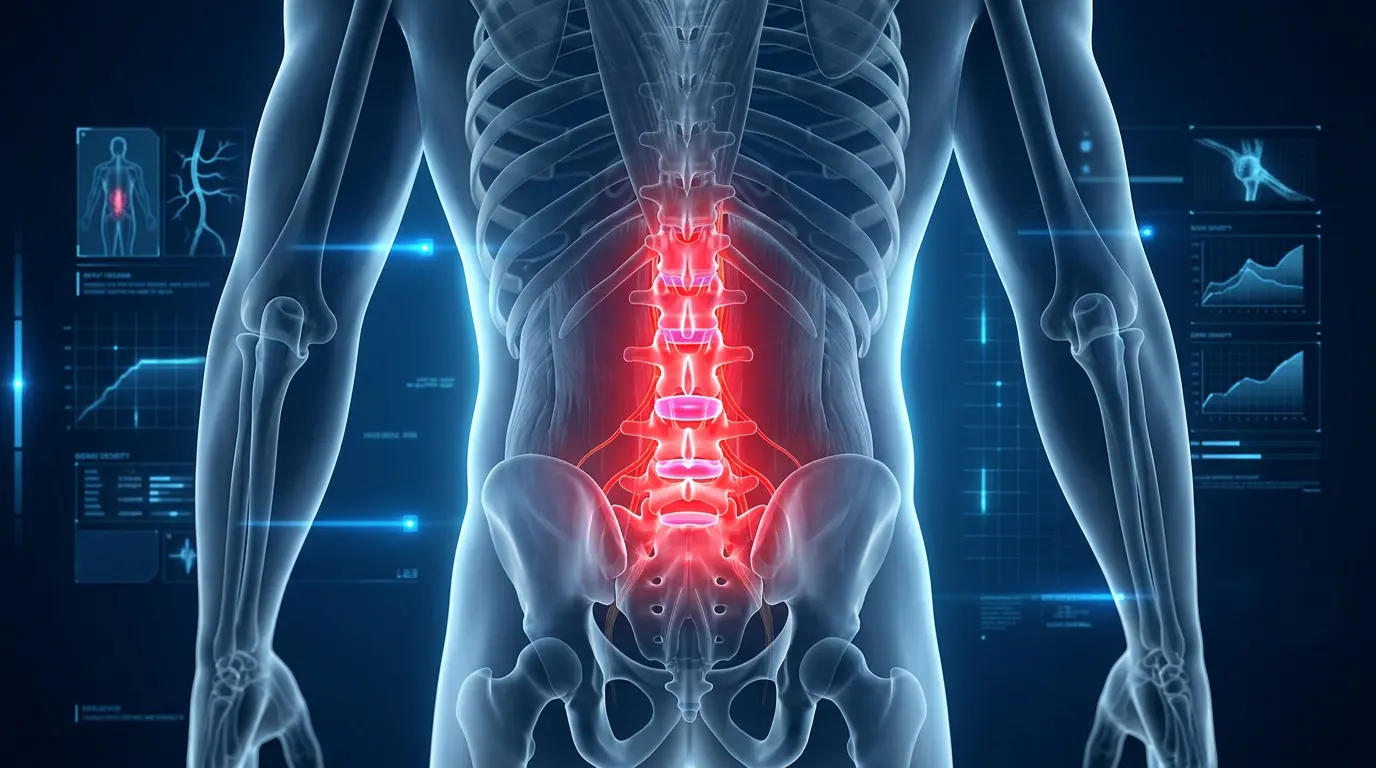
Lower Back Pain: Causes — From Muscle Tension to Disc Problems
- Date 01.07.2026
Muscle Tension and Overload
The most common cause of lower back pain is overload of the muscles surrounding the spine, which compensate for joints or body regions with reduced stability — such as weak hips or core muscles. This type of pain usually worsens after prolonged sitting or standing and eases with a change in position, but it tends to return if the actual cause isn’t addressed.
Sacroiliac Joint and Hip Dysfunction
The sacroiliac joint and limited hip mobility are a common, though often underdiagnosed, cause of lower back pain. When the hip loses range of motion, the spine starts compensating for the missing movement, which over time leads to overload and pain.
Disc Problems and Disc-Related Issues
When pain radiates down the leg and is accompanied by numbness or muscle weakness, the cause may be nerve root compression related to a disc bulge or herniation. These symptoms require thorough functional assessment and sometimes a consultation with a neurologist or orthopedist.
Lumbar Instability
In some patients, pain results from insufficient stabilization of the deep core muscles, leading to micro-overloads of spinal structures during everyday activities. This type of pain often worsens with specific movements, such as bending forward or twisting the torso.
Psychosocial Factors and Stress
Chronic stress and emotional tension can directly affect muscle tension in the lower back. This doesn’t mean the pain is “just in your head” — the neurophysiological mechanisms of stress genuinely influence pain perception and how readily muscles tense up.
How a Physiotherapist Identifies the Cause of Pain
During an appointment, a detailed history and functional assessment are key — evaluating joint mobility, muscle strength, movement patterns, and neurological tests if pain radiates into a limb. This helps distinguish myofascial pain from joint or disc-related problems and guides the choice of treatment.
When Back Pain Requires Urgent Medical Attention
Seek urgent medical care if the pain is accompanied by progressive leg muscle weakness, loss of bladder or bowel control, numbness in the groin area, or severe pain unrelated to movement that also occurs at night.
Summary
Lower back pain can stem from many possible causes — from simple muscle overload, through joint dysfunction, to disc-related problems. Effective treatment starts with an accurate functional diagnosis, not with treating the symptom alone. If you’re dealing with back pain, book an appointment at our clinic in Warsaw — together we’ll find its real cause.